
Find Washington Family Court Records
Washington family court records cover dissolution of marriage, custody and parenting plan orders, child support cases, adoption proceedings, minor guardianship matters, and protection orders filed at the Superior Court in each of the state's 39 counties. The County Clerk in each county maintains the official case files. You can search Washington family court records online through the statewide case search system, through each county's own portal, or by contacting the clerk's office directly to get copies of court documents.
Washington Family Court Records Overview
Where to Find Washington Family Court Records
Family court records in Washington are held at the Superior Court in each county. The County Clerk is the elected official who serves as the official custodian of all court files. They file and index every document, collect statutory fees, and manage public access to records. Under RCW Chapter 26.12, family courts in Washington have jurisdiction over dissolution of marriage, legal separation, child custody, parenting plans, child support, adoption, and guardianship. This means all those case types produce records that end up with the County Clerk.
The state also operates a centralized case search tool. You can use it to get basic case details across all court levels statewide.
The Washington Courts central search engine covers municipal, district, superior, and appellate courts. It shows party names, case status, and basic docket entries for most courts across the state.
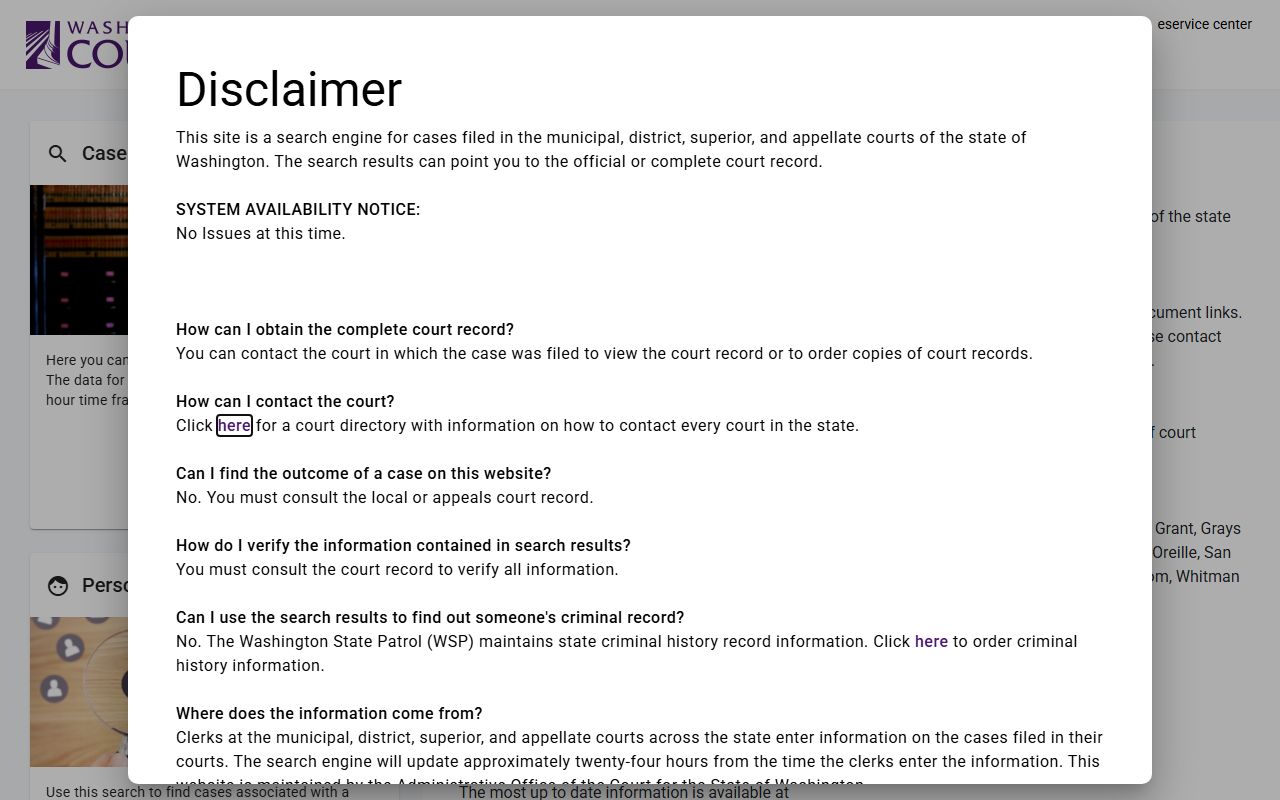
Keep in mind that docket information, judgments, and document links sometimes don't display correctly on this site. For complete and current records, contact the court directly or use the primary portal for that specific court.
Each county clerk can pull records by party name or case number and provide plain or certified copies. Certified copies carry the court seal and are needed for things like name changes or proving marital status. You can request records in person, by mail, or through online portals where they are available.
How to Search Family Court Records Online
Washington has several online systems for looking up family court records. Which one you use depends on the county where the case was filed.
For most Washington counties, the Odyssey Portal is the main online search system for Superior Court case records. It covers Adams, Asotin, Benton, Chelan, Clallam, Clark, Columbia, Cowlitz, Douglas, Ferry, Franklin, Garfield, Grant, Grays Harbor, Island, Jefferson, Kitsap, Kittitas, Klickitat, Lewis, Lincoln, Mason, Okanogan, Pacific, Pend Oreille, San Juan, Skagit, Skamania, Snohomish, Spokane, Stevens, Thurston, Wahkiakum, Walla Walla, Whatcom, Whitman, and Yakima Superior Courts.
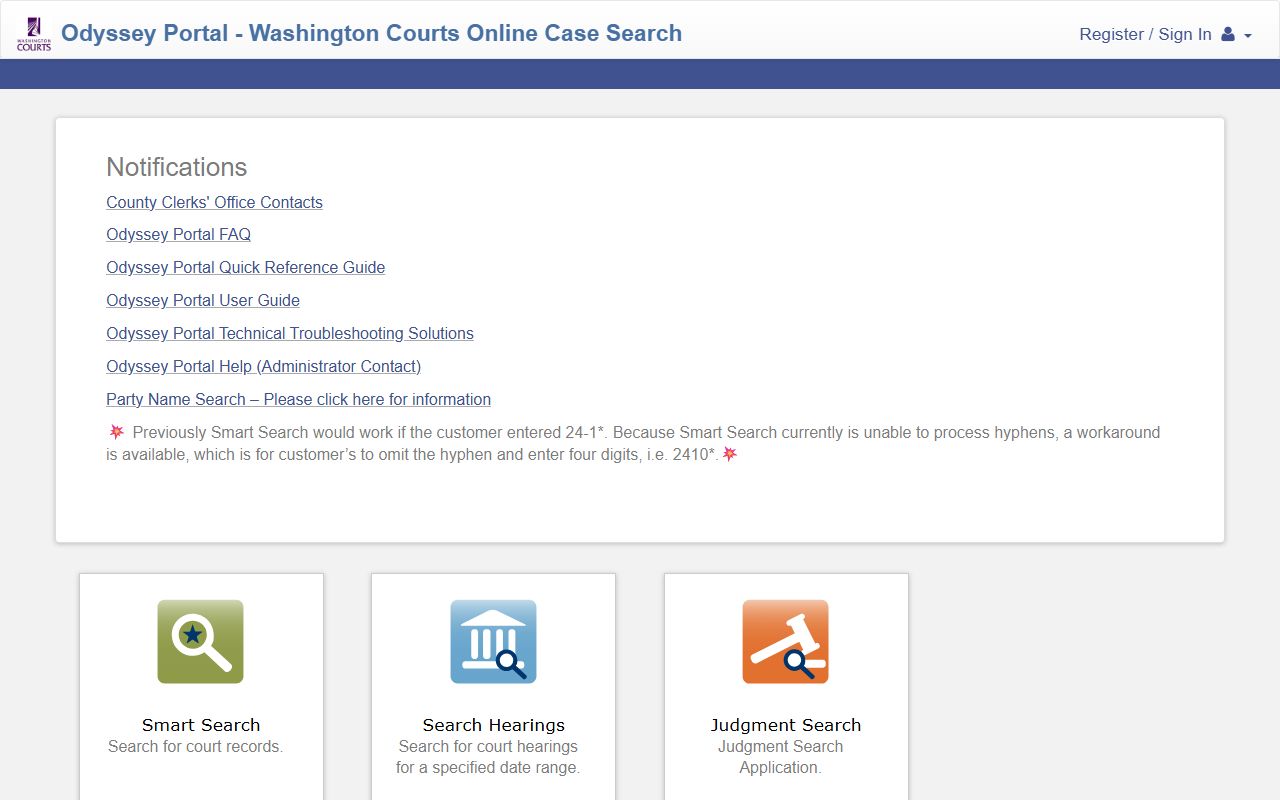
The Odyssey Portal allows searches by party name, case number, and attorney. When searching by case number and using Smart Search, omit hyphens and enter four digits instead, for example type 2410 rather than 24-10.
King County uses its own portal. The most current King County Superior Court records are at the KC Script Portal. It covers all family law cases filed since November 1, 2004. Pierce County uses the LINX system. Seattle Municipal Court records are available through a separate portal, and Spokane Municipal Court has the eCourt system. For King County District Court, use the separate eCourt portal at kcdc-efiling.kingcounty.gov.
To find a case online, you typically need the full name of at least one party, the approximate year of filing, and the case number if you have it. Most portals let you narrow results by case type or date range.
Types of Family Court Records in Washington
Washington Superior Courts handle a wide range of family law matters. Each type of case produces its own set of documents that become part of the official court file.
Dissolution of marriage, called "dissolution" under state law, is the most common. A dissolution case file includes the Petition for Dissolution, the Summons, financial declarations, a proposed parenting plan when children are involved, and the final Decree of Dissolution. The decree spells out all the terms: property division, the parenting plan, child support amounts, and any spousal maintenance ordered by the court.
Family court case files in Washington commonly include these types of proceedings:
- Dissolution of marriage and legal separation cases
- Parenting plan and residential schedule disputes
- Child support orders, modifications, and enforcement actions
- Adoption petitions, consent hearings, and termination of parental rights
- Minor guardianship and conservatorship proceedings
- Domestic violence and anti-harassment protection orders
- Committed intimate relationship cases for unmarried couples
Most family court records are public in Washington. You can request copies from the County Clerk without being a party to the case. Some sealed financial records and documents involving minors have restricted access under state court rules.
Washington Family Court Laws and Statutes
Washington family law is laid out in several chapters of the Revised Code of Washington. These statutes set the rules for how family court cases work, what courts can order, and how records are handled.
The RCW Chapter 26.09 statutes govern dissolution proceedings and legal separation. Chapter 26.09 covers the no-fault standard, filing requirements, the 90-day waiting period, property division, parenting plan criteria, child support calculation, and relocation notice rules.
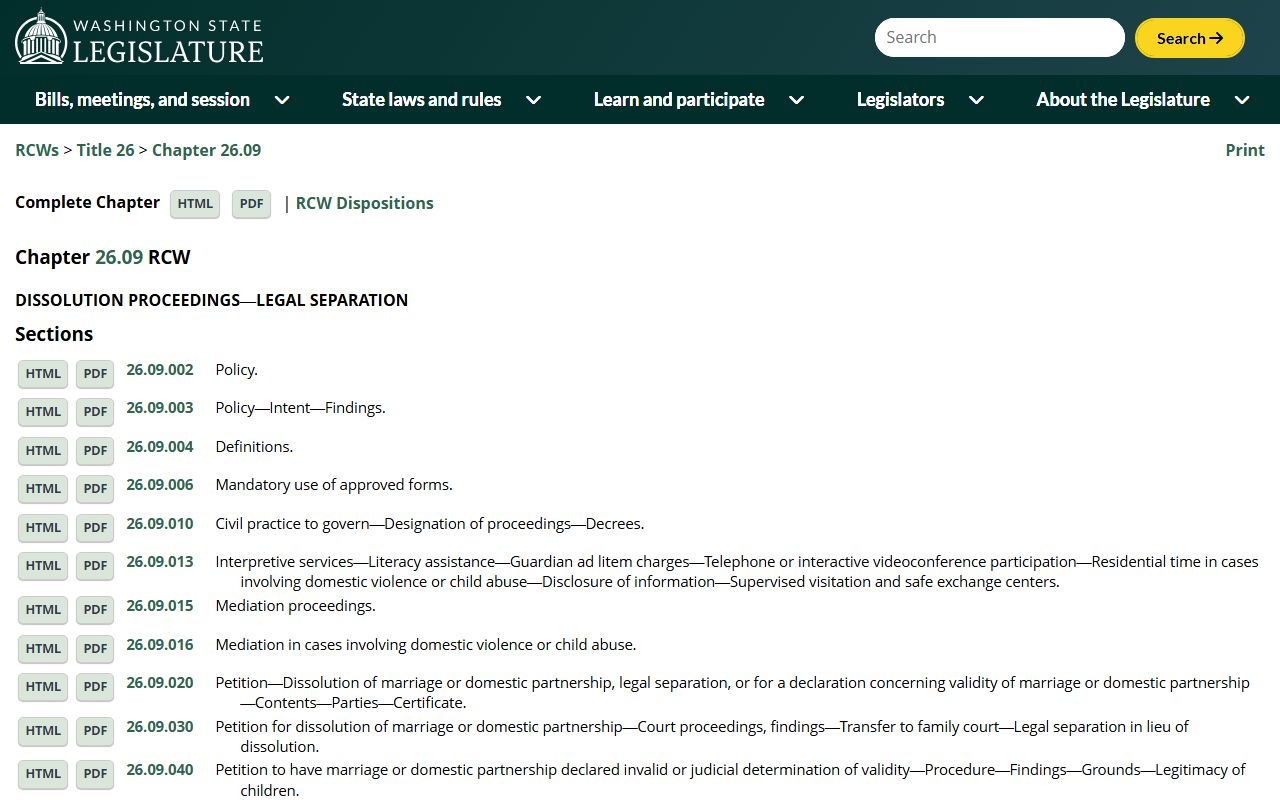
Washington is a pure no-fault state. The only ground for dissolution is that the marriage is "irretrievably broken." The court does not assign blame, and neither spouse can block the other from proceeding.
RCW Chapter 26.12 establishes the family court system within Washington's Superior Court structure. It authorizes Superior Courts to designate family court judges and commissioners, appoint guardians ad litem, require parenting seminars, set up courthouse facilitator programs for self-represented litigants, and protect the privacy of parties in family proceedings.
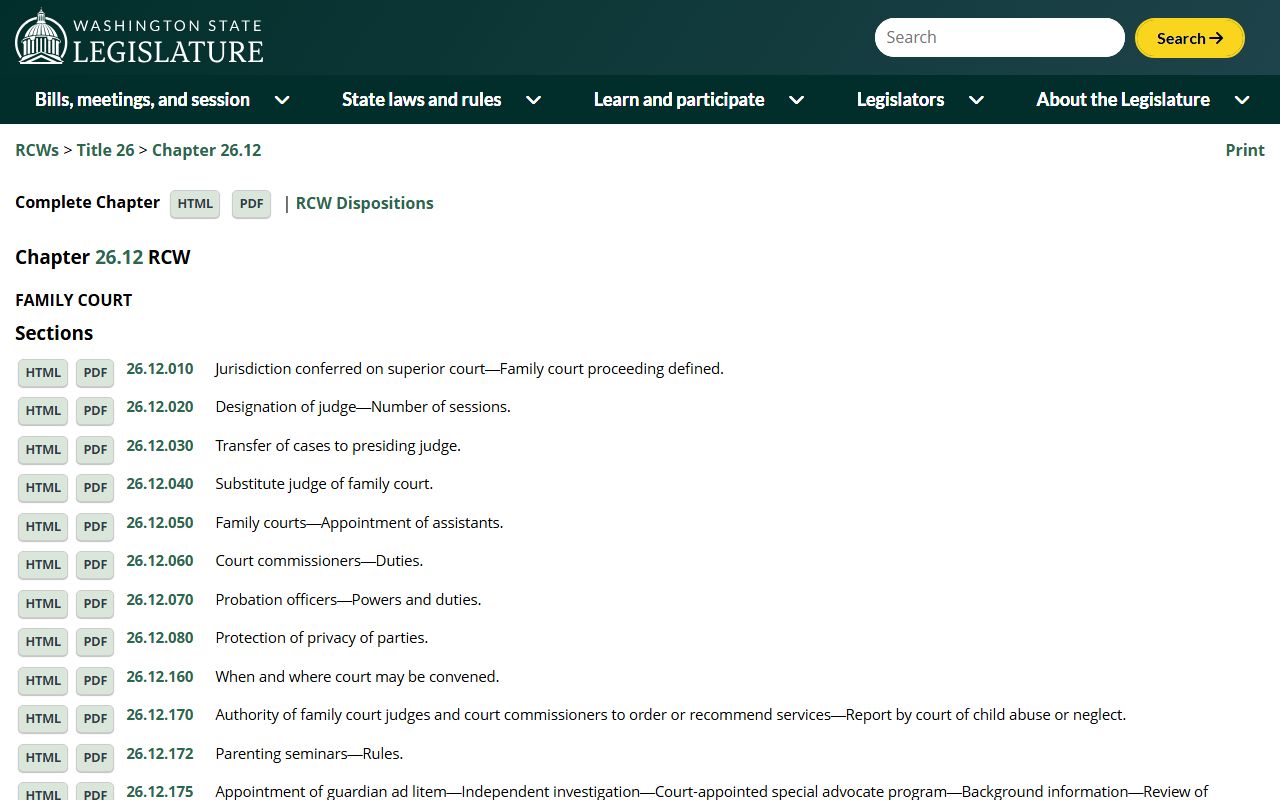
The family court facilitator programs authorized under this chapter help people who don't have lawyers complete forms, understand court procedures, and calculate child support.
RCW Chapter 26.33 covers adoption law in Washington. It sets out petition filing requirements, hearing procedures, consent and relinquishment rules, preplacement and post-placement report requirements, grounds for termination of parental rights, and the sealing of adoption records. Adoption files are confidential in Washington, but a confidential intermediary program exists for post-adoption contact.
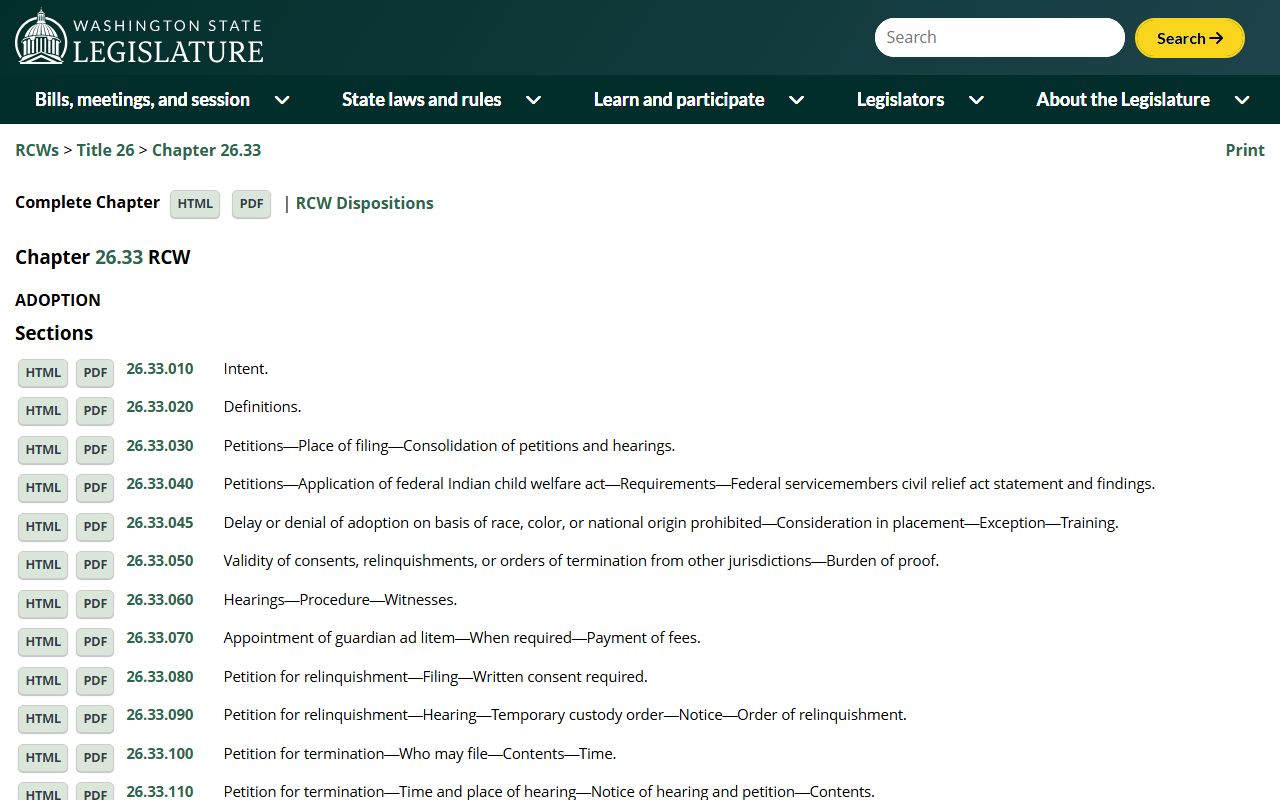
Adoption records are sealed after a decree is entered. Limited release of original birth certificates and contact preference forms are allowed under the statute.
When child safety is at issue in a family court case, RCW Chapter 26.44 applies. This statute governs reporting of child abuse and neglect, investigation procedures, appointment of guardians ad litem in abuse cases, protective detention, and multidisciplinary child protection team involvement.
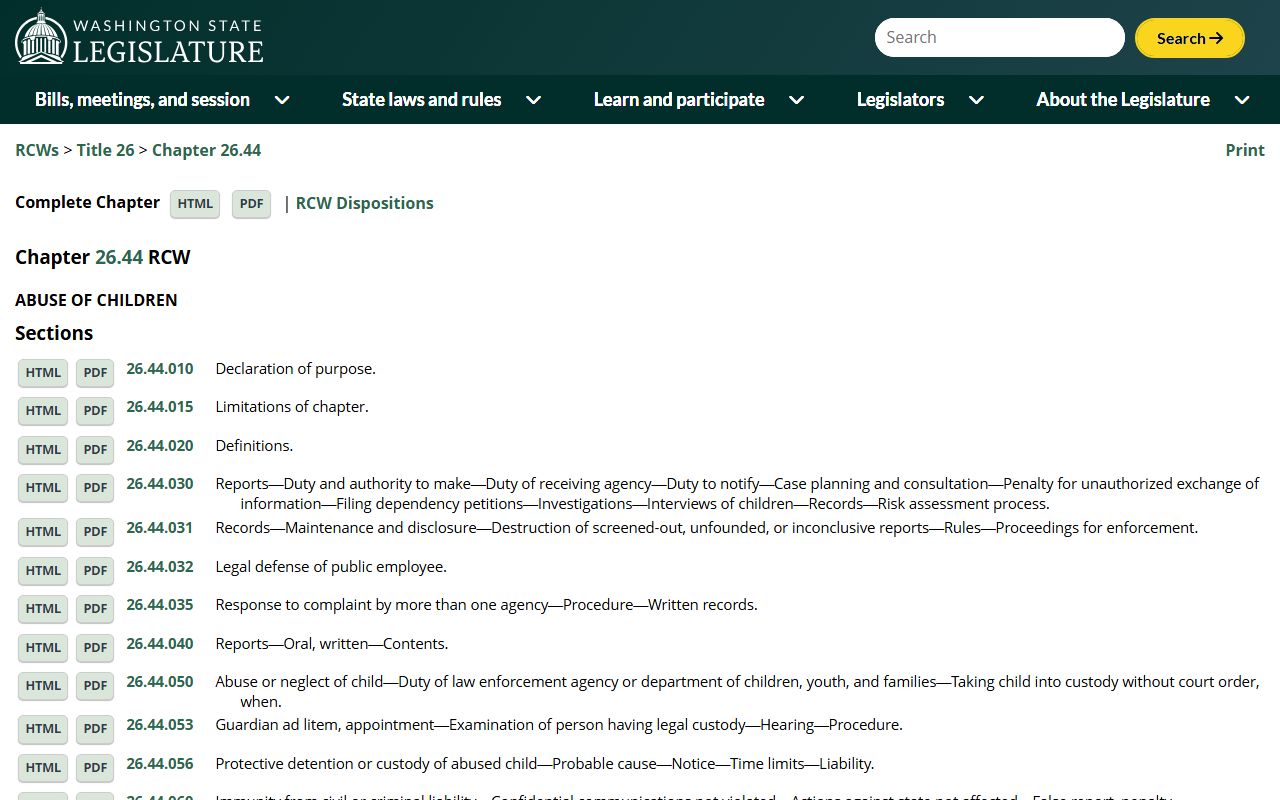
Mandated reporters must notify authorities of suspected child abuse. Courts can order protective measures and dependency proceedings that become part of the family court record.
Vital Records and Certified Copies in Washington
The Washington State Department of Health maintains a statewide index of marriage and divorce records from 1968 to present. Anyone can request a certified or informational copy. You do not need to show proof of identity or relationship to the subject of the record. Fees start at $25 per copy.
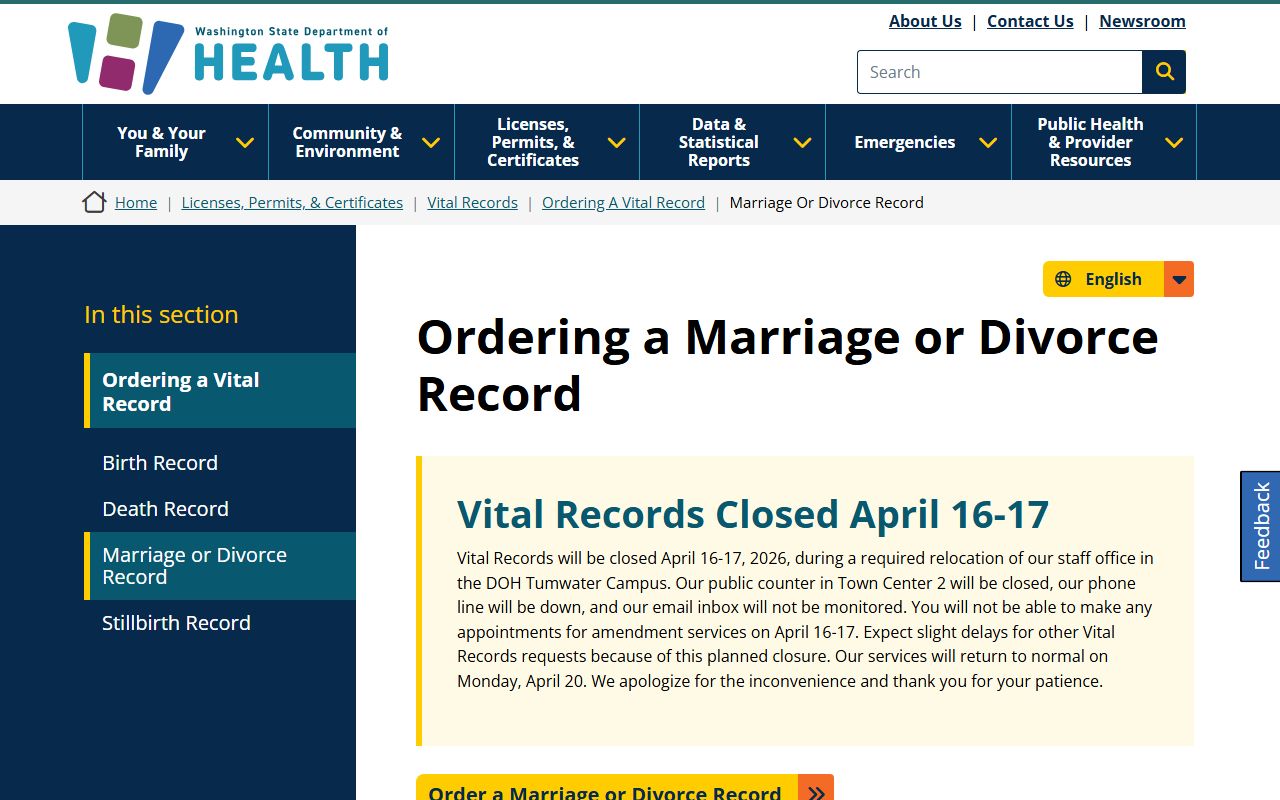
For a divorce certificate, you need the full name of at least one party, the approximate date, and the county where the court finalized the case. For a marriage certificate, you need the county where the couple obtained the marriage license. VitalChek online or phone orders process in 3-7 business days. Mail requests take 6-8 weeks.
Divorce certificates and divorce decrees are two different things. The Department of Health issues a one-page certificate confirming that a dissolution occurred on a specific date. That is not the same as the full Decree of Dissolution. The decree is a multi-page court order that lists the terms of the case, including property division, custody arrangements, and support amounts. Decrees come only from the County Clerk in the county where the case was finalized. The DOH does not have decrees.
For records prior to January 1, 1968, contact the County Clerk in the county where the event occurred. The statewide DOH index does not cover anything before that date. The federal CDC guide to Washington vital records confirms these same procedures and contact information for the Center for Health Statistics at (360) 236-4300.
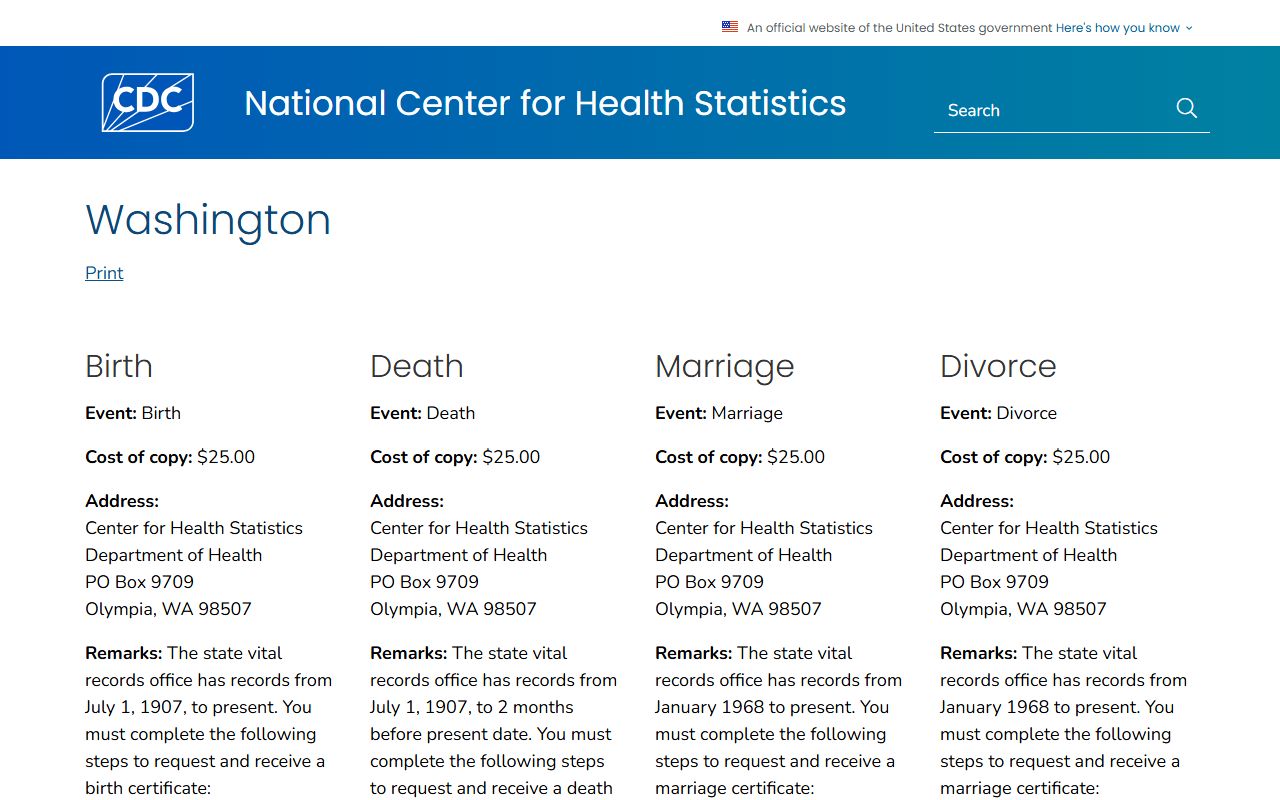
The CDC resource is useful if you need to understand what information is required for each type of record request before you begin the ordering process.
Court Forms for Washington Family Law Cases
All standard family law forms are available free on the Washington Courts forms page. The site has forms for dissolution, legal separation, parenting plans, child support, domestic violence protection orders, adoption, and minor guardianship. Forms must be printed single-sided per GR 14.
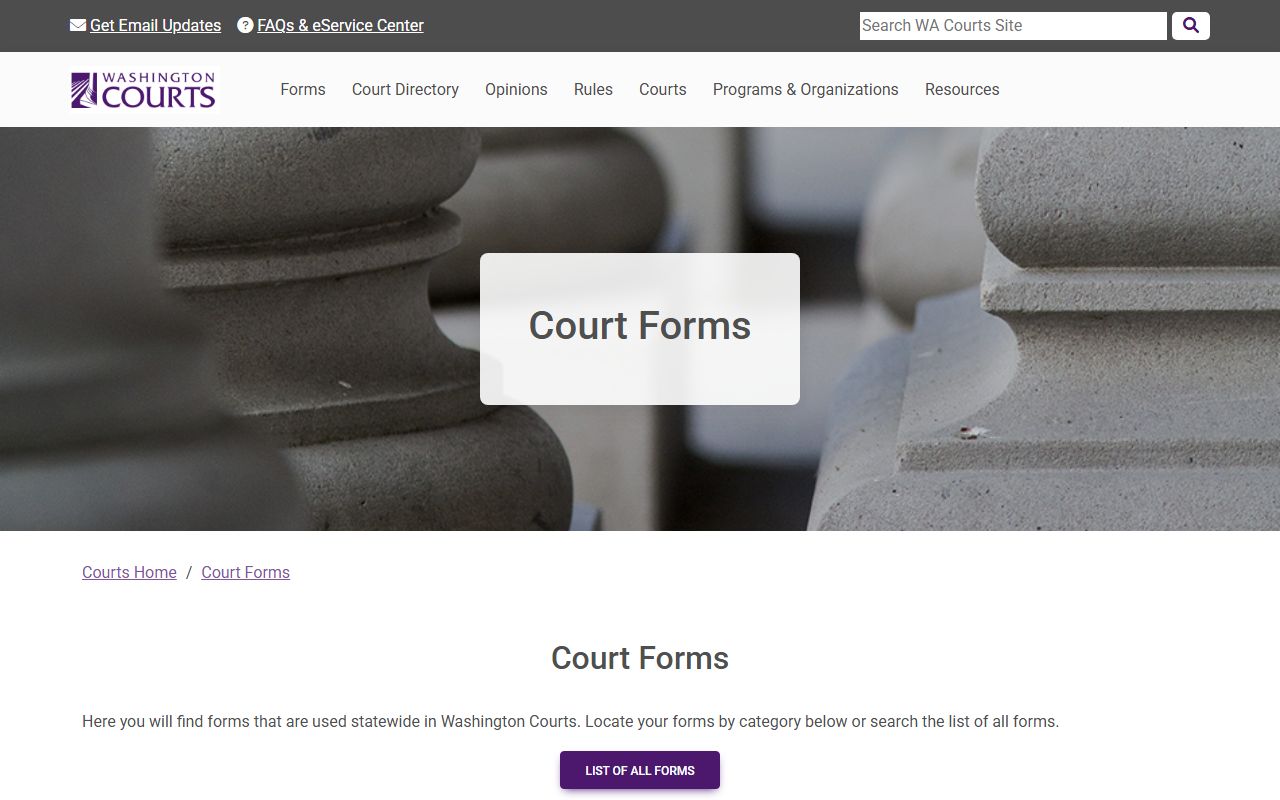
Guide & File is an interactive tool on the forms page. It walks you through a series of questions and builds a completed form set based on your answers. You can review the output and then file the documents with the court. This is a practical option for straightforward cases.
Courthouse facilitators are available in many Washington counties to help people complete family law and guardianship forms. They can explain terms and assist with form selection, but they are not attorneys and cannot give legal advice. Check with the local court to see if a facilitator service is available and what the appointment fee is.
Note: Some counties require additional local forms beyond the statewide set. Always check the local court's website or contact the clerk's office to confirm what is needed before filing.
Public Access to Washington Court Records
Washington court records are generally open to the public. You do not have to be a party to the case. You do not need to state a reason for your request. The Washington Judicial Branch public records policy under General Rule 31.1 confirms this right and sets out request procedures for administrative records of the judicial branch.
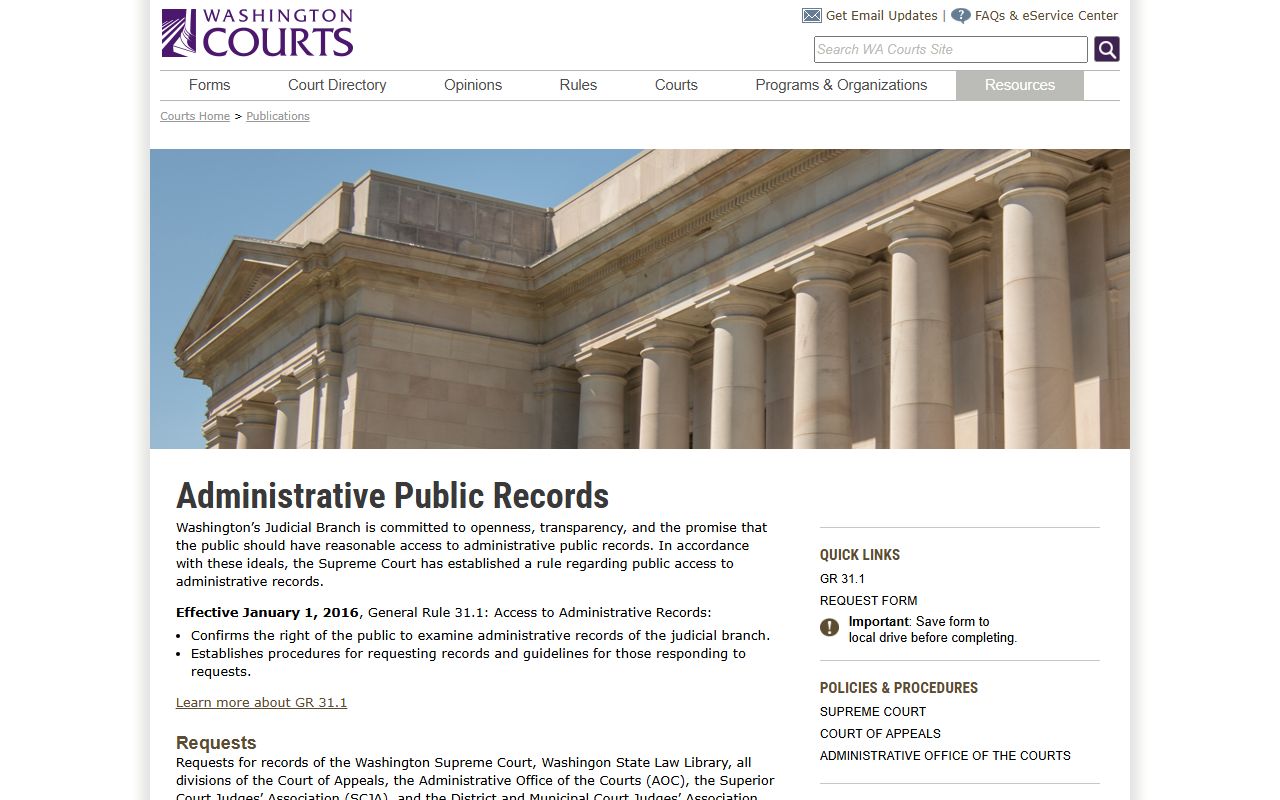
General Rule 31.1 took effect January 1, 2016. All requests for administrative records of the judicial branch must be in writing. The AOC's public records officer will respond within five business days. Fees for copies are $0.15 per page for photocopies and $0.10 per page for scans. Research time beyond the first free hour costs $30 per hour.
Some records have restricted access. Sealed financial documents, tax returns, and detailed asset statements may not be available. Social security numbers and account numbers are redacted from public filings. Adoption records are sealed. Records involving minors, including parenting evaluations and dependency proceedings, have more limited access. A party can petition the court to seal additional materials by showing good cause, but courts weigh privacy against the public's right to access and such requests are not common.
For records from individual court cases, contact the county clerk directly rather than the AOC. Each court handles requests for its own case records. The court directory on the Washington Courts website has contact information for every Superior Court clerk in the state.
Washington Judicial Information System
The Washington Judicial Information System (JIS) is the backbone of the state's court data infrastructure. It provides case management tools to appellate, superior, limited jurisdiction, and juvenile courts statewide. JIS serves as the statewide clearinghouse for criminal history information, domestic violence protection orders, and outstanding warrants. It connects courts with the Washington State Patrol, Department of Corrections, Department of Licensing, local law enforcement, and prosecutors.
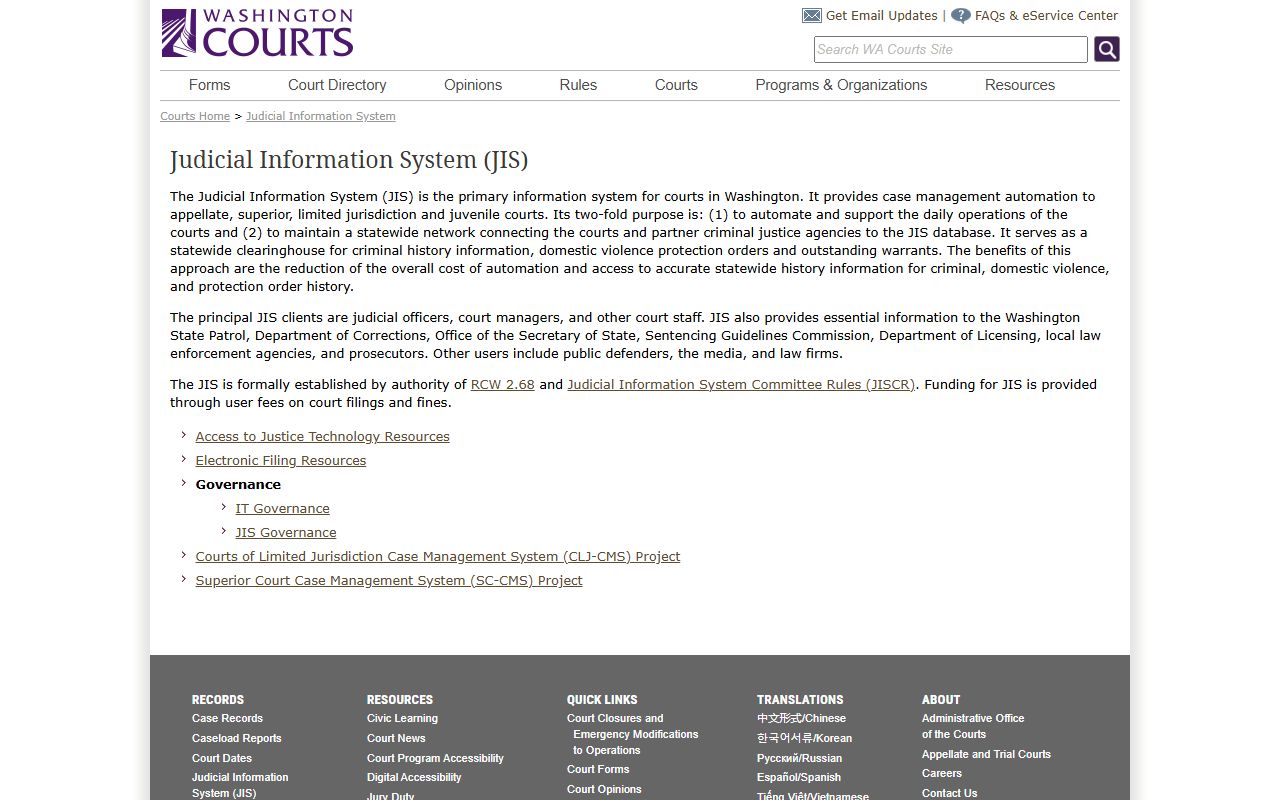
Public defenders, the media, and law firms also use JIS data. Funding for JIS comes from user fees on court filings and fines. The system is formally established under RCW 2.68.
For professional or high-volume users who need display-only access to court records, JIS-Link is a fee-based subscription service run by the Administrative Office of the Courts. The cost is $0.145 per transaction with a $13 minimum monthly charge. The system is offline for maintenance from 3:00 am to 6:00 am daily.
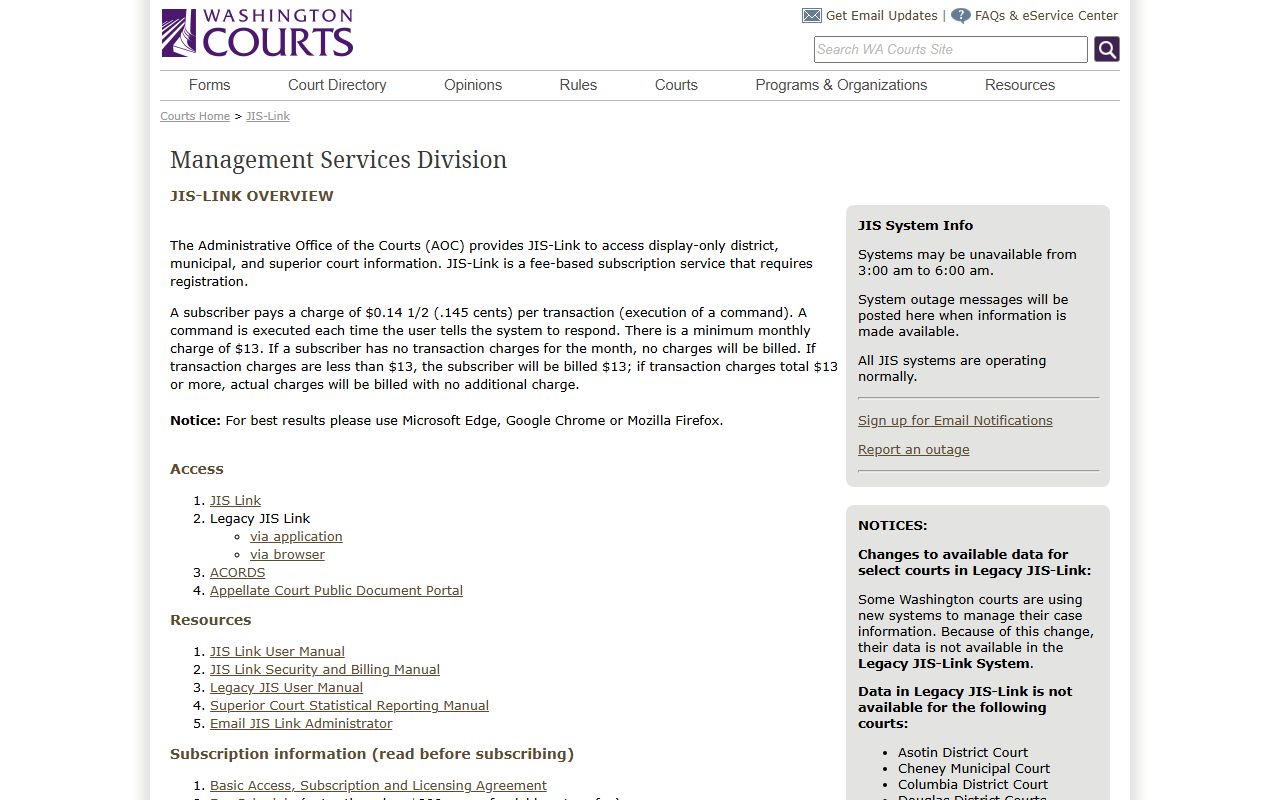
Legacy JIS-Link may not include data from courts that have moved to newer systems. An updated web version of JIS-Link covers some of those courts. For the most current records at any individual court, direct contact with the court or use of the court's primary portal is the best approach.
Historical Family Court Records in Washington
For older family court records that predate the statewide vital records system, the Washington State Digital Archives is the go-to resource. It was the first digital archives in the nation to preserve electronic records of both state and local government. The Digital Archives holds collections of historical divorce records, marriage records, Superior Court case files, birth and death records, and Frontier Justice territorial court files.
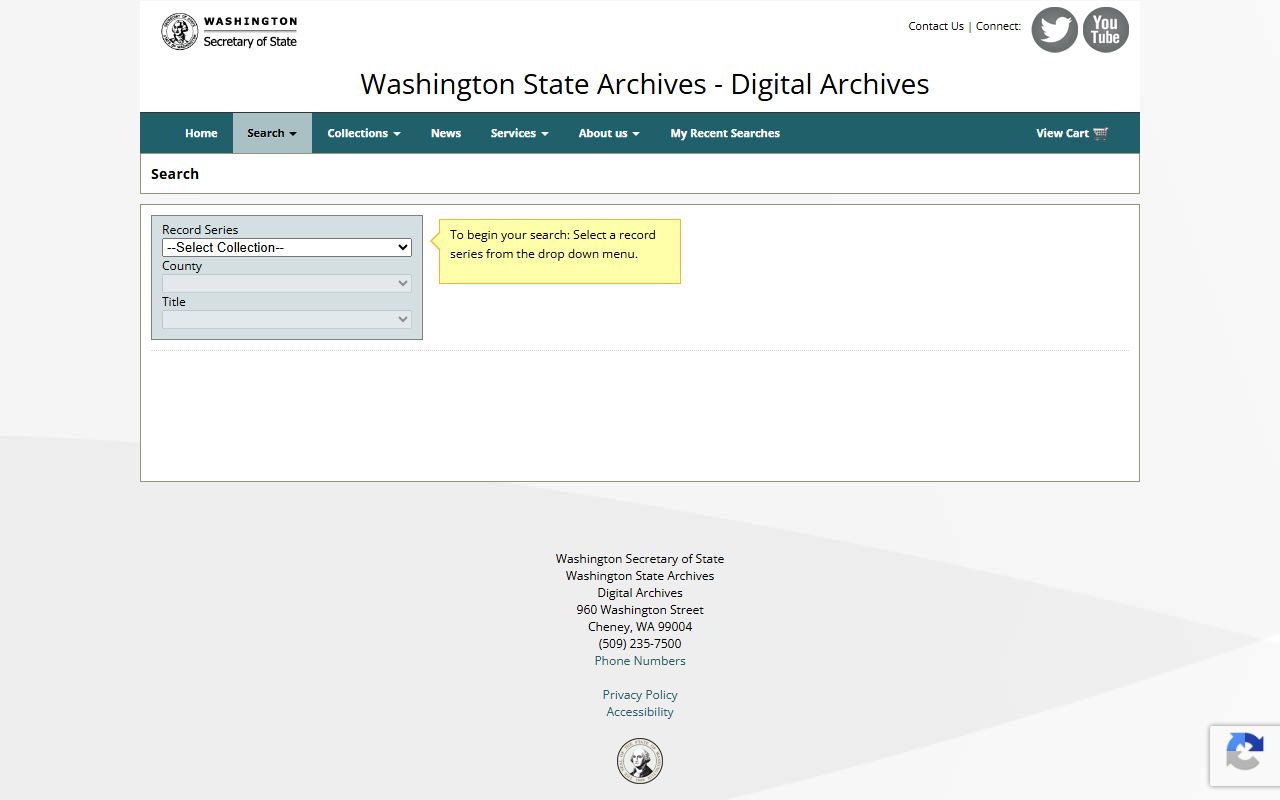
To search the Digital Archives, select a record series from the drop-down menu on the search page and enter at least one search field. Available collections include Divorce Records, Marriage Records, Superior Court Cases, and Frontier Justice: Territorial Court Case Files. These are especially helpful for genealogical research and for cases filed before 1968 when the statewide vital records index begins.
Legal Help for Washington Family Court Cases
Washington Law Help is a free public legal information library for Washington residents. It provides step-by-step guides and forms for dissolution, custody, child support, guardianship, adoption, and protection orders. Resources are available in Spanish and other languages. The site is especially useful for people who are handling their own family law case without an attorney.
Northwest Justice Project is the largest legal aid organization in Washington and provides free civil legal help to low-income residents. Family law cases including dissolution, custody, and child support are among their services. Call (888) 201-1014 to ask about eligibility and services.
The Washington State Bar Association lawyer referral service is available at (206) 443-9722. You can also search for family law attorneys through the WSBA's online directory. Many attorneys offer an initial consultation. County bar associations in larger counties like King, Pierce, and Spokane also run their own referral services.
Many Washington courthouses have a self-help center or family law facilitator who can point you to the right forms and explain court procedures. They cannot give legal advice, but they can help you understand what you need to file and how to fill out the forms correctly.
Browse Washington Family Court Records by County
Each of Washington's 39 counties has its own Superior Court and County Clerk who handles family law cases. Pick a county below to find local contact info, court portals, and resources for family court records in that area.
View All 39 Washington Counties
Washington Family Court Records by City
Residents of major Washington cities file family court cases at the Superior Court in their county. Pick a city below to find out where to go for family court records in that area.